“Epoxy” and “polyaspartic” are often treated as two complete floor choices. In practice, a floor may use multiple layers and chemistries. The right question is what each layer does for your slab, garage use, and sun exposure—not which product name sounds newer.
The short comparison
Epoxy is a broad family of resin flooring materials with many formulations and uses. Polyaspartic coatings are often selected for their faster cure and UV-stability characteristics, though performance depends on the particular product and installation. Some systems use an epoxy base with a different topcoat; others use another combination. Product labels alone do not tell you the whole specification.
Why a New Mexico garage may need a different answer
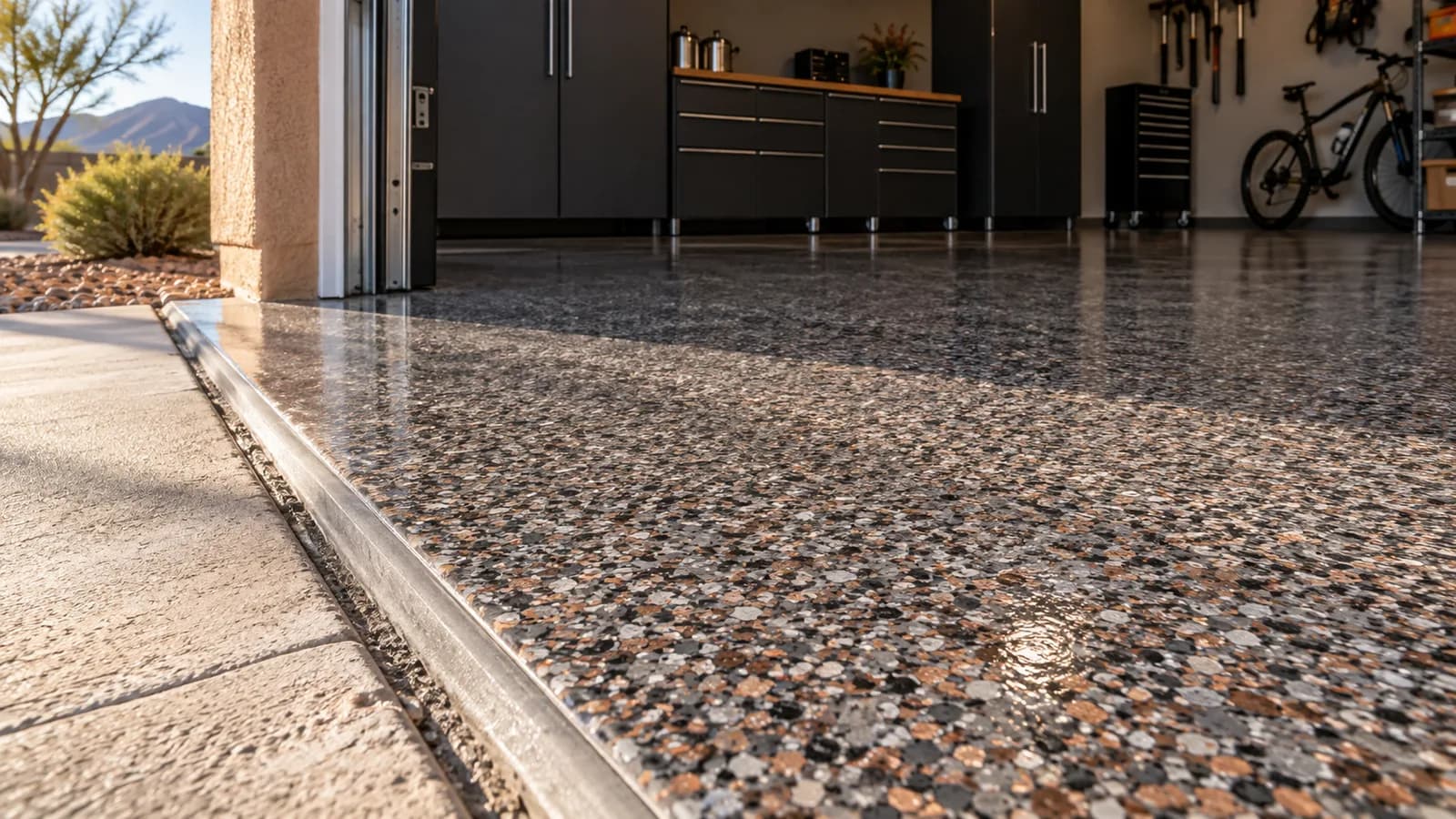
Sunlight at an open garage door can be intense, so ask how the exposed threshold will hold its appearance over time. Temperature and working time also matter during installation. The selected system should fit the slab, weather window, and the amount of time you can keep cars and storage off the floor.
No chemistry overcomes inadequate preparation. Grinding or other profile work, contamination removal, crack treatment, and moisture assessment should be specified before the finish layers are chosen.
Questions to ask before choosing
Instead of accepting a one-word answer, ask for the complete system.
- What are the basecoat and topcoat, and why were they selected?
- How will the garage-door threshold handle UV exposure?
- What prep and repairs are included?
- When can I walk on the floor and return vehicles, under expected conditions?
- What maintenance and written warranty terms apply?
Our practical view
A properly matched system can deliver an attractive, durable floor with either chemistry playing a role. The best proposal explains the substrate, layers, cure conditions, and tradeoffs in plain language.
Compare complete systems and preparation plans, not “epoxy” versus “polyaspartic” as isolated labels.
NEXT STEP
Ready to talk about your floor?
Share a few details and photos for a ballpark estimate. Final recommendations depend on an assessment of your actual concrete.
Sources and further reading
We use these references for general guidance; product suitability and project pricing require a site-specific review.